Showing posts with label review. Show all posts

Tuesday, January 17, 2012

Vive la Bretagne : ICE Revisited

As some of you may remember, I had the pleasure of taking my very first cooking class this past Fall. Ever since attending "Elegant Autumn Desserts" with Chef Vicki Wells at the Institute for Culinary Education in downtown Manhattan, I'd been aching to go back and try my hand on some other delicacies.

The Institute for Culinary Education is located on 23rd street between 5th and 6th avenue, and offers a full range of recreational cooking classes for those interested in cooking, baking, wine and bar-tending, and cheese.

This time around--motivated by the gift of two cooking classes of my choice for Christmas--I decided to opt for a cooking class as opposed to a baking class. People always ask me what I prefer--cooking or baking. I'd have to say that I prefer baking, because it just comes to me more naturally. There seems to me that there is less room for error, and who could say no to working with ingredients like cream, chocolate, and sugar? I do enjoy cooking though, even though it does not come as easily to me.

This time around, I chose Vive la Bretagne, a celebration of tradition Bréton cuisine. The class was taught by Chef Hervé Riou who is an ambassador of Breton cuisine in the United States, representing the Union Culinaire Bretonne. My motivations for taking this particular class were twofold: first, my family originates from Brittany, the northwestern peninsula of France that projects into the Atlantic Ocean, and, second, I was looking to acquire some tricksy cooking skills.

The class was limited to 20 people and was spread over four hours on a Monday morning. The price was reasonable, considering the time in the kitchen, the price of the materials, and the fact that you got to take bags of goodies home. (I have what must amount to three rabbits in my fridge.)

Within our four hours we made Salade de Roscoff (salad of warm seasonal vegetables in an herb vinaigrette), Timbale de saumon aux herbes et fenouil marinée (smoked salmon served with marinated fennel in lemon and creme fouette with shallots confit), Soupe de poisson cotriade (traditional fish soup), Medaillons de veau à la mode d'Iffiniac (sautéed veal medaillons with Muscadet, onion and grated cheese), Coquille St Jacques à la Concarnoise (pan-seared scallops served with a ragout of chanterelles or wild mushrooms and a vermouth reduction), Lapin sauté aux herbes de Bretagnes (rabbit braised with mushroom shallots parsley and a white wine-herb infusion), Flan de St Enogat (flan with marc of cider and apples or pears caramalized), and Traou Mad (traditional butter cake).

Each one was relatively simple to make, and came out looking and tasting divine. Each used tools and ingredients that are easily available and that shouldn't be too much of a drain on the budget.

Look for each recipe as I remake them in the confines of my home kitchen in the next few weeks!

Monday, November 7, 2011

Restaurant Review : Eataly

If you've been keeping up with my Halloween countdown and array of ghostly goodies, you can only imagine how exhausted I was by the end of the month of October. This past week, I have been detoxing with a lot of sleep and a lot of vegetable broth and water. Ok, I'm exaggerating--I have been eating, but I've been slowed down quite a bit.

So, when my friend Lucy contacted me and asked me if I would be available for dinner, I jumped at the opportunity to eat something delicious and healthy that I did not have to cook myself.

We both work in downtown Manhattan, and decided upon the popular and iconic Eataly, located at 200 5th Avenue on 23rd Street, right across from the Flatiron building and on the same block as the Institute for Culinary Education. When I attended my cooking class at ICE, a woman in the class urged me to visit Eataly: "You're right across the street," she said. "It would be a terrible shame to miss it!" That day, as I emerged sleep-deprived and laden with baked goods, I lacked the enthusiasm to go, but this was the perfect opportunity to have a catch up with a friend over dinner and see what all the fuss was about.

Eataly is so much more than a restaurant: it's a market selling meat, fish, cheese, pasta, bread, sweets, beer, coffee, vegetables, and olive oil (to name a few), and a collection of specialized restaurants each serving a different array of meticulously-prepared foods.

As the Eataly website describes, the founder of Eataly Oscar Farinetti wanted to "make high‐quality Italian foods available to everyone, at fair prices and in an environment where people can shop, eat and learn." His partners, the award-winning Mario Batali and Lidia and Joe Bastianich, have collaborated to create a true dining experience that transports you from the heart of Manhattan to the bustle of an Italian marketplace and piazza.

Lucy and I decided to eat at the fish restaurant, Il Pesce. We got seats at the bar that overlooks the kitchen, and each enjoyed our choice of delicious and not-too-pricey seafood. I had the Spiendino di Polpo, a skewer of octopus, fingerling potatoes, and cipollini onions with a fresh lemon taste and a side of crimson beets. Lucy had Mantis Shrimp served in a delicate green pesto with a side of brocoli raab. The quality and presentation of the food was superb, and the flavors welcome and unexpected. Though we had thought of going to the gelateria afterwards for dessert, we were both too full, and instead decided to check out the Caffe Lavazza, which serves coffee, tea, beer, and aperitifs. I had a cold and generous espresso served with Amaretto, and Lucy enjoyed a hot chocolate that was like liquid happiness. All in all, it was a meal worth waiting for.


There are a variety of restaurants and food counters at Eataly, each serving a specialty for--what I would call--fair prices:

Manzo: The most formal dining experience at Eataly, serving a dizzying array of meats, and both modern and traditional Piedmontese beef dishes.
Birreria: A rooftop restaurant and brewery, serving beers brewed on premises with a fantastic view of the New York skyline. Make sure you get there early to avoid a waitist!
La Piazza: A vibrant and bustling (also, standing) eatery serving wine, charcuterie, and cheeses, from Salumi & Formaggi like Prosciutto di Parma or San Daniele from Salumeria Rosi and prosciutto cotto from Parmacotto.
Il Pesce: A fish restaurant with a wide choice of whole fish, shrimp, soups, oysters, and daily specialties from chef, Dave Pasternack. Sit at the bar to get a close-up view of the kitchen and to watch your food being cooked.
Le Verdure: A restaurant for those who appreciate a simple harvest, with plates of colorful seasonal vegetables.
La Pizza & Pasta: The Italian classic, refined.
Lavazza Caffe: A stunning coffee bar serving a wide selection of high-quality and inexpensive (compared to most coffee in New York) coffee concoctions, served with or without alcohol.

In addition to these above restaurants, you can take a look at the take-home and to-go options at Caffe Vergnano, the Pasticceria and Gelateria, Venchi Cioccolato, La Pizza & La Pasta to go, the Rosticceria, and the Paninoteca.

Photo courtesy of Mario Batali's website.

Sunday, October 30, 2011

The Buzz : The Wall Street Journal goes hunting for the best Pumpkin Beers

Last week, I posted about my one and only experience with Pumpkin Ale, specifically Smashed Pumpkin Ale. To my disappointment, it was not very tasty or very pumpkin-y for that matter, and left a bitter aftertaste.

Yesterday in the cooking section of the Wall Street Journal, there was an article that voiced the same concerns that I had raised with pumpkin ale--its bitterness, acidity, and disconcerting medley of spices.

William Bostwick's article, "Gourd Lovin'", from the October 29th edition of the Journal gives the history of pumpkin ale, which has been brewing since the 17th century, and proposes some ales that stand out of the crowd.

I have reproduced the article below. You can look at the original at http://online.wsj.com/article/SB10001424052970204644504576651132079347592.html?mod=googlenews_wsj . Once again, this is William Bostwick's article from the Journal, and I do not take credit for it.

Gourd Lovin': A new batch of pumpkin beers is proving they're not just a seasonal gimmick

William Bostwick


When the leaves change color, beer store shelves turn orange to match. It's pumpkin beer season, and the trap is set. Each year, we can't resist plucking a bottle or two, but like a bowl of candy corn, their festive hue belies their taste: too sweet, too sour and sodden with perfume-y spice.

It doesn't have to be this way. The best pumpkin beers are the most unexpected. Far from pie-in-a-bottle, they blend in maple syrup, dark chocolate and the vanilla smoothness of oak barrels—dressing the humble gourd in elaborate costumes that buck almost 400 years of tradition.

Long considered the candy-corn of seasonal beers (colorful, but not so tasty), pumpkin beers are starting to prove otherwise. William Bostwick reviews some of his favorites on Lunch Break as Wendy Bounds and Connor Doughtery taste test the brews.

Pumpkin beer is as old as American beer itself. The first settlers from Europe, having braved the wild Atlantic for a strange and tavern-bare land, can't be faulted for slapping beer together from whatever scraps they could find. Into Colonial brew kettles went corn stalks, molasses, tree bark, persimmons and lots and lots of pumpkins. "We have pumpkin at morning and pumpkin at noon," a 1630s ditty ran. "If it was not for pumpkin we should be undone." To some, homegrown beer was not just necessity, but rebellion, a thumbed nose at British imports. But that doesn't mean it was any good.

In fact, it was—and too often still is—awful. Here's why: Sweet and nutty when roasted, pumpkins turn sour when their sugars ferment into beer, giving off an unpleasant cidery tang. In fact, one of the first published recipes for pumpkin beer (from 1771) included an ingredient that was more akin to pumpkin cider: pressed, fermented gourd juice. Brewers hid that taste with a mix of boiled spices like cinnamon, ginger and nutmeg. And that's where it all went wrong.

A brewer I know says that if you can taste a single ingredient in a beer, there's too much of it. Beer is a tippy boat: paddle too hard and it flops into the deep. Belgian wheat beers are regular offenders, tasting occasionally like coriander or orange-peel soup. With pumpkin beers, the opposite happens. Few are one-note—no nutmeg soup here—but their pumpkin-pie potpourri can be even more intense than a single, overemphasized spice. Call it the Candle Shoppe Gestalt: The blend of scents is worse than any individual offender.

And yet that pumpkin-spice canon, established centuries ago, has persisted ever since, analogous now with the season itself. Thankfully, that's changing, as brewers bring new ingredients, wild yeasts and, yes, a subtler spice rack to this style of brew. It's high time for another rebellion in beer: a pumpkin ale that actually tastes great. Here are five that are leading the way.


1. Dogfish Head Punkin Ale, 7% ABV: Named after the bizarre tradition of Punkin Chunkin, in which catapults hurl gourds across a Delaware field, Dogfish Head's classic is a dry, meaty brown ale. The pumpkin provides body-building starch, the spices are restrained and a touch of brown sugar dries the beer out so it snaps like brittle toffee and crunching leaves.


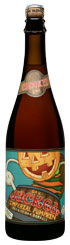
2. Jolly Pumpkin La Parcela, 5.9% ABV: The American masters of wild yeast live up to their name, finally, with a pumpkin beer. Of course, it's so much more than that: a nose of mulled cider, dusted at the finish with cocoa; a sour bite, not from pumpkin but from wild bacteria; and toasted, even slightly burnt, spice to tie it up.


3. Uinta Oak Jacked, 10.31% ABV: Part of Uinta's Crooked Line series of special releases, Oak Jacked takes the Salt Lake City brewery's Punk'n Harvest Pumpkin Ale, bumps up its strength to 10.31% (get it?) and ages it in oak barrels for six months. The originally perfume-y beer bulks up and mellows out, its spices hidden behind a velvet wave of vanilla-streaked liquor.


4. The Bruery Autumn Maple, 10% ABV: The best pumpkin beer in the patch isn't a pumpkin beer at all. Fall tradition for these SoCal brewers means staying up all night to roast 600 pounds of sweet potatoes for every batch. They bring a nuttiness and yes, a slight cidery sourness, but it's wonderfully offset by earthy molasses, maple syrup and a fruity Belgian yeast.


5. Smuttynose Pumpkin Ale, 5.6% ABV: More spicy than spiced—this ale from Portsmouth, N.H., is bracing and bitter. Less aromatic than most, with more noticeable hops, it's not an obvious pumpkin beer, but not quite anything else. Who says autumn can't also be refreshing? This is the only pumpkin beer that rightly comes in a six-pack.

Tuesday, October 25, 2011

The Buzz : Shipyard Smashed Pumpkin Ale

With the onset of the chill fall weather, I saw more and more ads popping up for various pumpkin-flavored ales. Mostly, I was curious--what did pumpkin ale taste like? was it a good thing for ale to taste like pumpkin? would it even taste like pumpkin anyway?

I went to Whole Foods at Columbus Circle last week, and asked their beer stocker what he would recommend. Whole Foods had a good selection of 6 or 8 different pumpkin options. I opted for a large bottle (to share) of Shipyard Brewery's Smashed Pumpkin Ale. It's presumably called "smashed" because of it's very high alcohol content--9.5% for ale.

I was excited to see what the flavor would be, and so a friend and I cracked one open and took a go.

It was a very full and heady beer with a strong taste, that was almost spiced. It had good foam, and did, indeed, give a good buzz. The pumpkin taste, however, was different than I anticipated: there was definitely a pumpkin aftertaste (in a good way), but it fell short of my expectations.

So, in conclusion: good, tasty beer, but not very pumpkin-y.

The gentleman at Whole Foods also recommended Pumpking Ale, which he said had a good flavor. So, perhaps it's time to try that next!